Goldman Sachs: Higher Oil Prices Still Hurt the Labor Market, but Less Than in the Past - FJElite
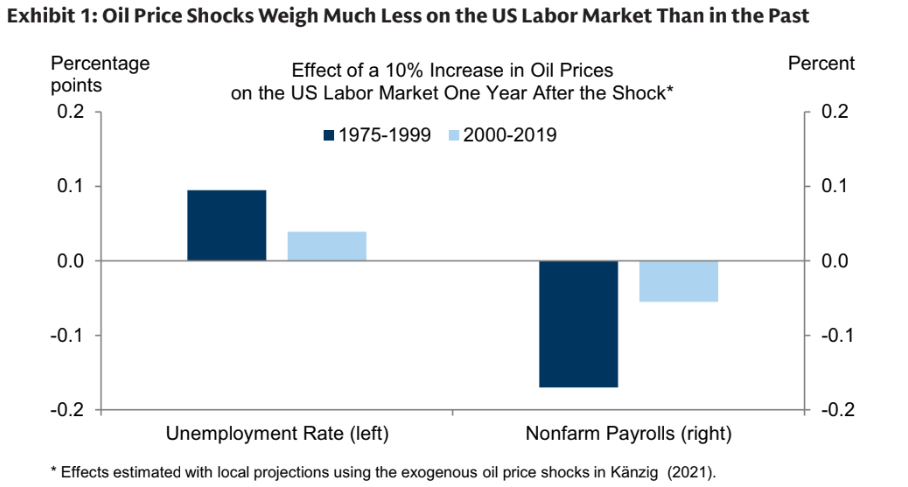
Higher oil prices still tend to reduce job growth and raise unemployment in the US, but the effect now looks to be only about one-third as large as it was between 1975 and 1999. That likely reflects the lower oil intensity of US GDP and the rise of domestic shale production. Estimates are broadly in line with the Fed’s FRB/US model and academic research, and suggest that the oil shock implied by the baseline oil forecast would lift the unemployment rate by 0.1 percentage point, contributing to a rise to 4.6% by Q3 2026. The main drag comes through weaker hiring and modestly higher layoffs in industries most exposed to discretionary spending.
Higher oil prices have usually supported employment in oil extraction and support industries since the shale boom, but gains are likely to be more limited this time because of major improvements in extraction productivity. Taking both sides together, with some job gains in energy but broader losses elsewhere, higher oil prices are expected to reduce payroll growth by around 10,000 per month on net through year-end.