MUFG: The USD - FJElite
The US dollar lost upward momentum yesterday after the dollar index ran into resistance at the 100.00-level. It followed reports that Iran and Israel have agreed to ease strikes against each other after the tit-for-tat strikes over the weekend threatened to derail peace negotiations. Israel’s Prime Minister Benjamin Netanyahu stated that Israel would hold fire in Iran for now but would respond should they attack again. Iran had earlier announced an end to its own military operations against Israel. However, they did warn that if Israel continued to attack, including southern Lebanon, then “much harsher and more crushing actions than before would be on the way”. Investor optimism triggered by the de-escalation in military tensions between Israel and Iran has since been encouraged by comments from President Trump overnight who stated he expects to declare total victory “very soon", and “oil prices will come tumbling down”. He made the comments during a tele-rally for South Carolina Republicans. The latest developments have resulted in the price of oil dropping back closer to recent lows at just above USD90/barrel.
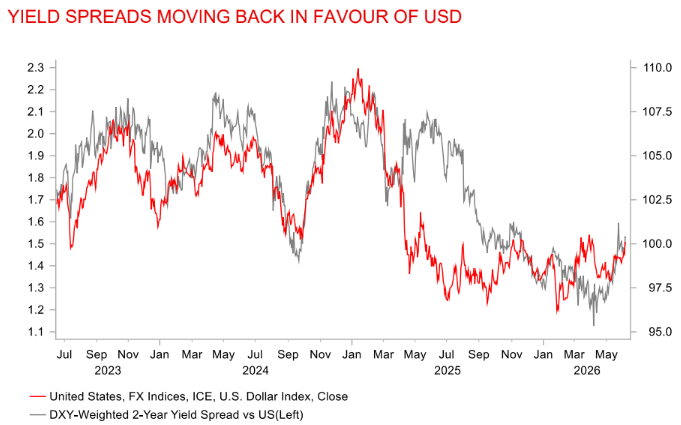
Nevertheless, the US dollar is still continuing to derive more support from the recent hawkish repricing of Fed rate hike expectations. The US rate market has moved to price in multiple Fed rate hikes in the year ahead moving market expectations for the Fed policy outlook more into line with other major central banks such as the ECB who are expected to begin their own tightening cycle this week. It has resulted in yields spreads moving back in favour of the US dollar over the last couple of months. The next key test for the Fed rate hike expectations will be the release tomorrow of the latest US CPI report for May. The report is expected to reveal that headline inflation rose further above the Fed’s target to 4.2% in May as the impact of higher energy prices continues to feed through. At the same time core inflation is expected to move closer to 3.0% in May. While the pick-up in inflation is well anticipated in the coming months, it could add to investor unease over the Fed’s willingness to continue looking through higher inflation by leaving rates on hold. The next FOMC meeting on 17,h June is likely to be an important pivot point for Fed policy expectations and the US dollar as it will be the first time that new Fed Chair Kevin Warsh will outline his thoughts on how the Fed should respond to the energy price shock. Last week’s stronger nonfarm employment report has made it more likely that the Fed will at least drop their easing bias at the June FOMC meeting.