Goldman Sachs: Oil Risks Still Skew Higher Despite China Demand Weakness - FJElite
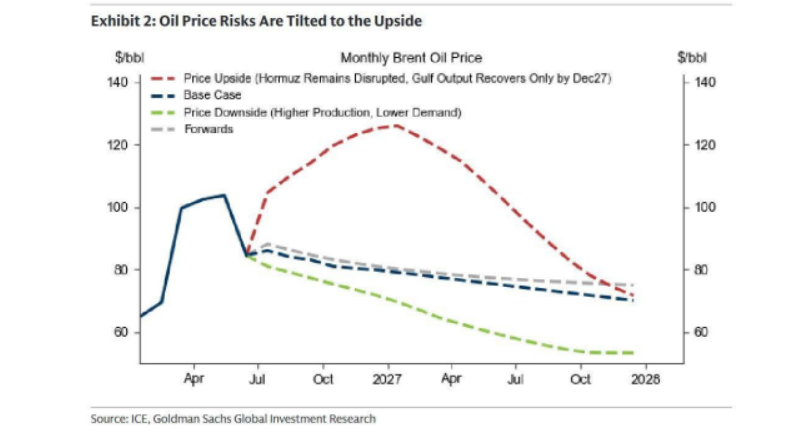
Lower Persian Gulf flows are pushing oil prices higher again, and the recent drop in estimated flows to below 45% of pre-war levels has already lifted Brent back above the base-case path for late 2026 and 2027.
The balance of risks still looks tilted to the upside, especially near term, with the biggest threats coming from further shipping disruption in Hormuz and possibly the Red Sea, as well as the risk of more lasting infrastructure damage from the Middle East and Russia-Ukraine wars.
If Hormuz disruption lasts through 2027, Brent could move above $120 in late 2026 and average around $100 in 2027.
The market is more vulnerable now because inventories have already been drawn down sharply, especially in OECD diesel and strategic reserves, even if visible global stocks are not dramatically lower year-on-year.
At the same time, the upside is not assumed to be as extreme as it looked earlier in the war because demand is proving more elastic, Middle East supply is adapting better, and the market appears more willing to tolerate lower inventories before forcing outright demand destruction.
China has also helped stabilise the market, with a sharp drop in crude imports reflecting weaker refinery runs, weaker product demand, and a move from stockpiling into destocking since the war began.