Credit Ágricole: Eurozone Inflation - FJElite
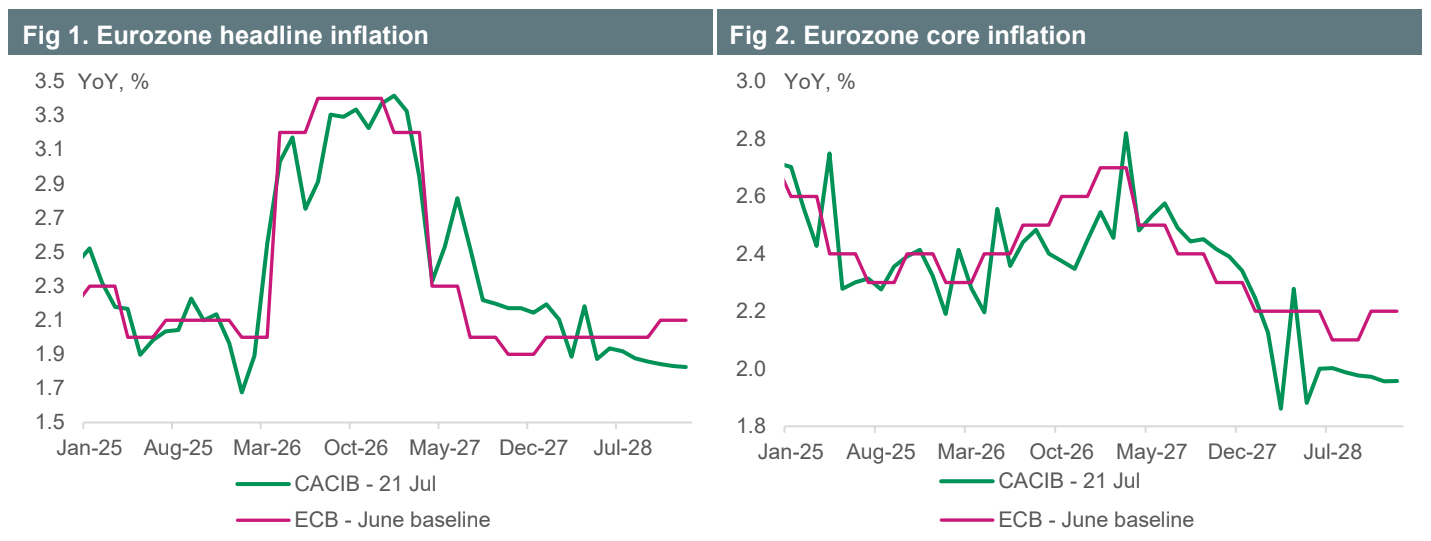
- For 2028, we expect headline HICP at 1.94% YoY and core at 2.02% which is slightly below the ECB and below market fixings. Apart from the EU-ETS2 implementation (January 2028), we think second-round effects from the ongoing conflict in Iran would have totally faded by end-2028. There would however be huge disparities across countries in line with different GDP growth, labour market and fiscal space. Finally, keep in mind that we use energy futures curves, which currently price a normalisation of energy prices before 2028.
- Last week, Eurostat released detailed figures for June HICP, with a significant revision of -5bp vs the preliminary estimate. This probably came from a wrong estimate of Dutch preliminary figures (estimated by Eurostat as not released in time by the CBS) and downside revisions in a few countries including Italy and Greece, despite the huge upside revision in Belgium (+30bp). It is also worth noting that Germany adjusted the weight of games of chance in this June release, but it did not impact June MoM.
- Considering the current energy futures curves and our adjusted forecasts after June HICP details, our take remains below market fixings, with a divergence during Q426 and again in Q327. We believe this divergence comes from the fact that the market is overweighting first energy futures and that it probably expects more second-round effects from the ongoing conflict than we do.
- EUR inflation-linked strategy: the energy crisis has become a double one, with military and energy infrastructure targeted in Russia (by Ukraine) and in the Gulf Region. In the Gulf, alternative routes continue to emerge, but their security remains questionable.
- In surface, crude oil prices look less elevated than in Q2. However, the refined products - gasoline, diesel - and even more natural gas and electricity prices in Europe show a much more worrying picture.