Berenberg: UK Outlook - FJElite
- New shock, resilient growth: The Iran conflict upended some of our 2026 predictions for the UK economy. The jump in global energy prices due to the Iran war will keep CPI inflation elevated, at 3.1% this year, instead of dropping back to 2% as we predicted in January. Meanwhile, slowing pay growth and flat employment have not fed through to the major slowdown in consumer spending that we anticipated; consequently, GDP growth has retained more momentum than we expected.
- Rate cuts delayed, not derailed: Despite this, we have pushed back the three 25bp interest rate cuts in our forecast rather than scrubbed them out. As the inflationary effects of past policy mistakes fade, slowing wage inflation due to a deteriorating labour market will become obvious. Even before the Iran conflict, employment was stagnating at best and unemployment was on the rise. Timely surveys of economic activity and bank lending show a belated squeeze on demand from higher energy prices and mortgage interest rates. As a result, we expect economic growth to stall in Q3 and the labour market to deteriorate further.
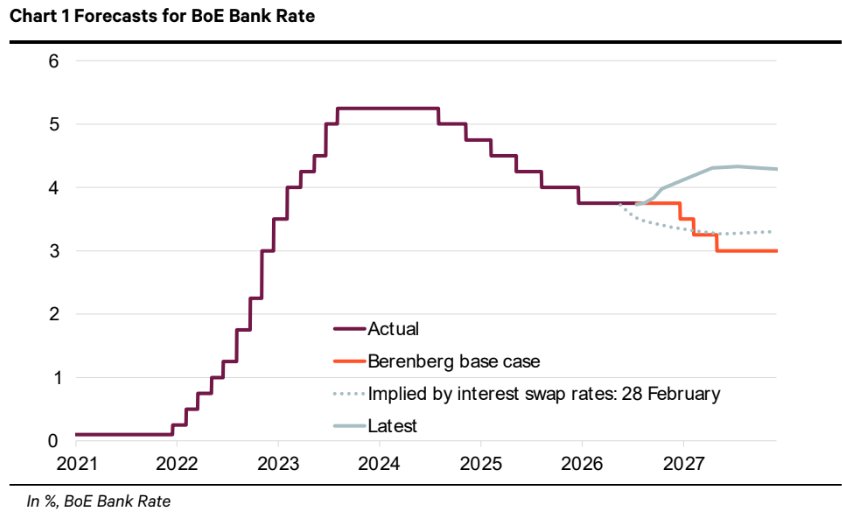
- Cyclical upturn: The silver lining is that this should drag inflation below' the Bank of England’s (BoE's) 2% target in the second half of 2027. Once inflation is under control, we expect the BoE to pivot from worrying about persistent inflation to stabilising the labour market by resuming interest rate cuts in December. We predict that it will lower the policy rate from 3.75% now to 3.00% in mid-2027. By contrast, investors price in two hikes to 4.25% - see Chart 1. If we are right, low'er short rates should reduce the 10-year gilt yield from 5.0% now to C4-3% by the end of 2027. The recent improvement in productivity growth suggests that lower interest rates will successfully lift GDP growth from 1.0% this year to 1.2% next year, and 1.8% in 2028.
- Political risk: New prime minister Andy Burnham must avoid new' policy errors that add to businesses’ costs or spook international investors. The shift in the policy mix from loose fiscal policy to lower interest rates that stimulate private sector activity depends on the government pressing on with fiscal consolidation. Burnham has signed up to key constraints: he wants to follow the existing fiscal rules and not raise the three main taxes. This implies that he will stay the course. The risk is that, over time, the Labour government decides it must spend more aggressively to secure a recovery in its popularity.