UBS: AI Research - FJElite
Two trends are increasingly shaping the AI trade: token optimisation and a shift toward cheaper open models, including Chinese alternatives. AI-native companies continue to report extraordinary growth, confirming that enterprise adoption is expanding well beyond coding. At the same time, compute and token costs have become a growing concern, making model routing, where applications move workloads onto cheaper and more efficient models when possible, a core capability rather than an optional feature. The market has now moved into a multi-model world where frontier labs coexist with open-source, custom-built, and specialised models.
Open Chinese models have materially changed the competitive landscape, with the focus now extending beyond performance toward token efficiency and cost. Nvidia’s Nemotron was also frequently cited as an alternative, while an earlier-stage shift toward models fine-tuned for specific customers and tasks is gathering momentum. These developments could weigh on growth at frontier labs such as OpenAI and Anthropic, but AI spending is still growing quickly enough that both frontier and open models may benefit.
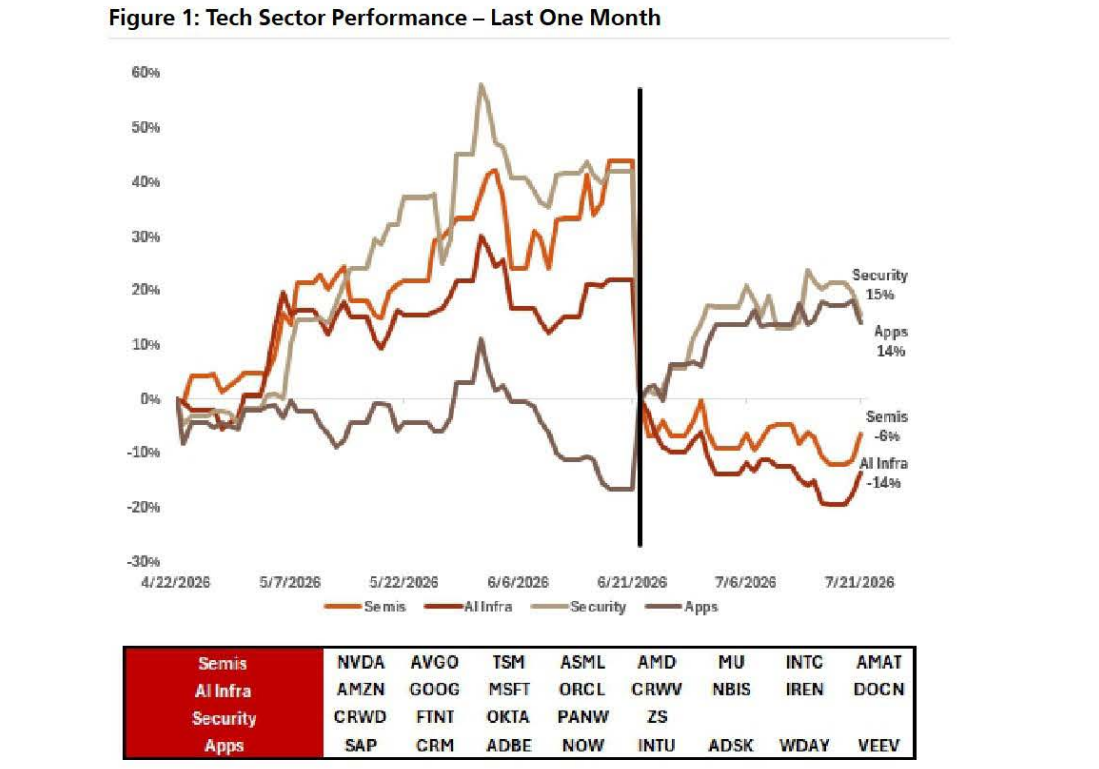
For the wider technology sector, the implications are mixed. Open-model adoption is not expected to reduce GPU demand, but instead redirect it toward more cost-effective workloads, which remains supportive for Nvidia. Hyperscalers such as AWS and Azure are already multi-model platforms and continue to face strong AI demand, leaving the impact broadly neutral to positive. Software faces more risk, as customers may respond to rising token costs by limiting application spending, while incumbent vendors may struggle to monetise model neutrality.