RBC's Forecasts for Oil - FJElite
Context
To varying extents throughout the Iran conflict, physical prices have been a better barometer of the reality on the water, while paper markets have better reflected the broad sentiment (often a more optimistic take) on the severity and tenor of the conflict and its impact on crude markets. The amount of headline-driven volatility has led to paralyzing levels of uncertainty, impacting market participation and thus price outcomes in our view.
Define "Normal"
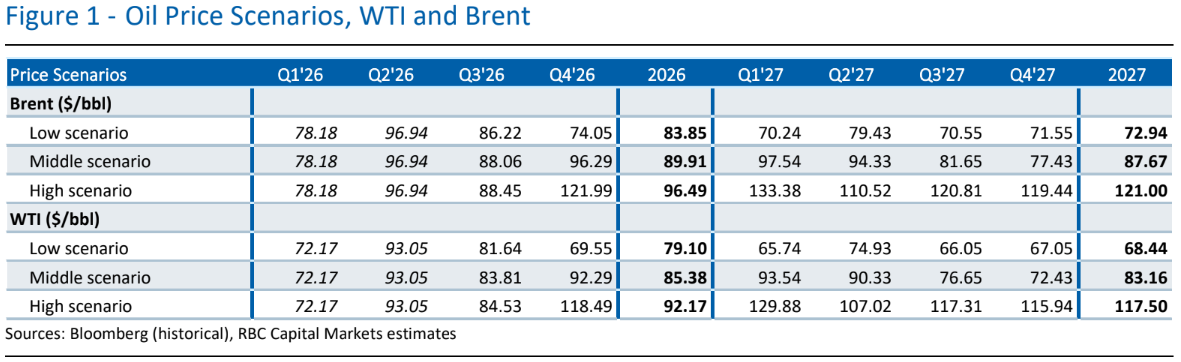
Regarding the trajectory of Strait transit, it is true that upon "normalization" in flows (it may not be to pre-conflict levels), crude prices will eventually settle well below the more elevated levels seen this year, but "normalization" is complicated and sustained lower prices will require sustained higher flows through the Strait. Whatever lower levels prices eventually do settle at, they are likely to be at a higher level than they were headed before the conflict began.
Re-escalation Risk
Importantly, re-escalation remains a risk, as we have learned in recent weeks. Each re-escalation in tensions that once again restricts flows through the Strait of Hormuz, and (now even the Red Sea) occurs against a backdrop of depleted commercial inventories, limited strategic stockpiles, and thus dwindling buffers. This leaves crude prices ever more reliant on China being in "eco mode" absent a sustained and permanent normalization.