MUFG: The USD - FJElite
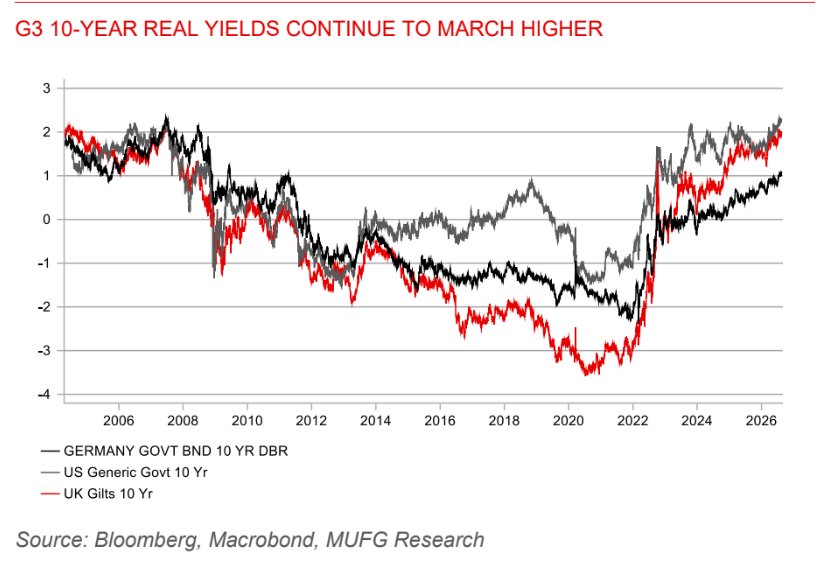
The US dollar has rebounded modestly today with the focus very much on the deterioration in bond market sentiment. UST bond yields have moved further sharply higher and the 30-year yield is now 25bps higher since the FOMC meeting on 29th July. The 30-year yield at 5.32% this morning is the highest since 2007 and curve steepening is showing clear momentum in the US and elsewhere. What is directly fuelling this worsening of sentiment now is less clear but the worsening situation in the Middle East is likely a factor in intensifying concerns over inflation and concerns over the US fiscal position. There remains zero appetite in the US for addressing the US fiscal position and that is increasingly weighing on the long-end of the curve. The unprecedent demand for capital to finance AI investments must also be playing a role here - this makes sense given a look at breakevens and sovereign yield spreads over swap rates show no big moves in either.
We should also mentioned Japan here. The decision of the US to join Japan in buying the yen has left an impression with investors that the US was growing concerned over Japan’s need to constantly sell US dollars for intervention through selling US Treasury holdings. The strange mention of the use of FIMA (US repo facility to swap UST bonds for cash rather than sell) gave the impression of a growing concern over the stability of the UST bond market that could turn out to have been a counterproductive move by the US Treasury.
The US Treasury International Capital (TIC) data for June was released last night and the data confirmed that Japan was the biggest seller of UST bonds with Japan’s holdings down USD 26.4bn and that drop followed a USD 66.8bn drop in May. Since February, Japan’s holdings have declined by USD 122.6bn. The first bout of intervention by Japan took place at the end of April, start of May so covers this period. The July TIC data would cover the joint intervention although the sales in June could have been building cash reserves for intervention. In any case, it is worth mentioning here that Japan has close to USD 170bn worth of cash sitting in its FX reserves and hence are not obliged to sell UST bonds to fund intervention - they are choosing to do so and that reinforces the concerns amongst global investors over the stability of the US Treasury market. Last night’s data revealed China was the next biggest seller of UST bonds in June.
How this plays out for FX is not straight forward. A US specific sell-off would highlight a lack of confidence in US assets that could trigger a repeat of episodes like January when increased US dollar hedge-related selling picks up and the dollar weakens sharply. The fiscal deficit outlook is dire and that is a real risk. However, if this curve steepening and general flight from duration is global then this could turn out to be US dollar bullish. The threat to global equities is certainly getting greater the higher longterm yields go and increased risk aversion, a vol spike and asset price declines would likely strengthen the dollar. The strength today of the dollar may suggest the initial FX reaction would be in that direction although we would expect that to ultimately fade.