MUFG: The EUR - FJElite
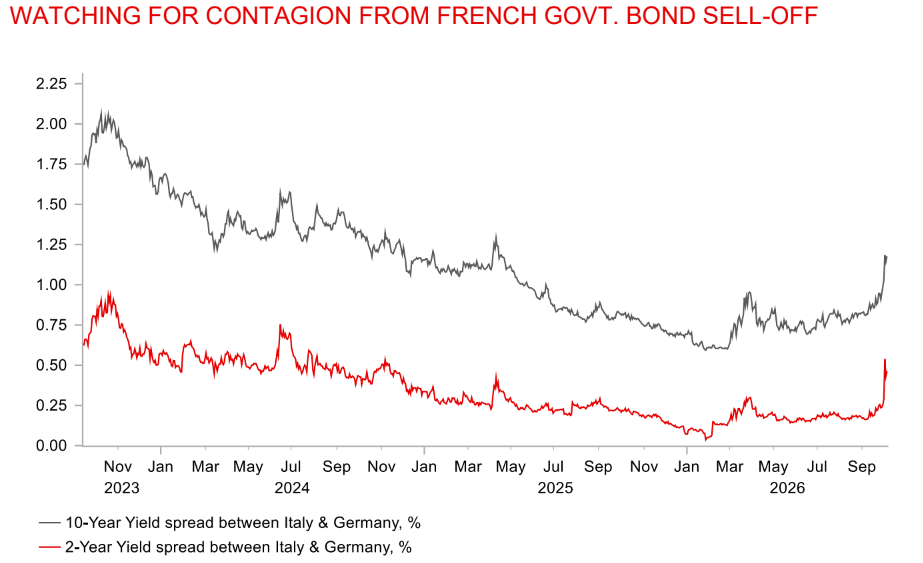
The euro has come under further pressure as the sharp sell-off in French government bonds raises concerns about broader financial instability and renewed fragmentation risks across the Eurozone. The deterioration has begun to spread beyond France, with Italian government bonds also coming under pressure, raising concerns that widening spreads could interfere with the transmission of ECB monetary policy. The resulting tightening in financial conditions has already led markets to scale back expectations for further ECB rate hikes, while lower German short-term yields reflect the growing belief that financial conditions may do some of the ECB’s tightening for it.
This creates a difficult policy dilemma for the ECB. Markets are increasingly considering whether the central bank may need to slow quantitative tightening or eventually use its Transmission Protection Instrument to contain disorderly bond-market moves. However, activating the TPI could create political and market concerns over the ECB effectively supporting government financing, meaning any intervention would likely require temporary purchases alongside credible fiscal adjustment. The current market pricing is broadly consistent with expectations for two further hikes, although renewed fragmentation could make even that path difficult to achieve.
France’s latest budget plans have so far failed to restore confidence, with the government targeting a reduction in the deficit through significant fiscal tightening. Political uncertainty remains a major obstacle, however, given the government’s lack of a parliamentary majority, doubts over whether the measures will pass and the proximity of next year’s presidential election. With limited near-term solutions to the fiscal and bond-market pressures, the risks remain tilted toward further euro weakness as investors continue to monitor French debt, contagion across the region and the ECB’s response.